Subscribe!


Get Every New Post Sent to Your Inbox

Enter your email address:

Delivered by FeedBurner


Search

Grab my button below! 


CurrClick


Click Here to Checkout The Ultimate Homeschool Expo!


Homeschool Transcripts


The Ultimate Homeschool Blogroll


 Kendra Fletcher is the homeschooling mom of eight, all of whom have either been, currently are, or soon will be preschoolers.


Monday
May282012

Favorite Resources for Teaching Inclusive History

Belinda Bullard introduced us to the essential idea of inclusive history, where we tell all the stories of all the people. It got me to thinking about our favorite inclusive history read-alouds and other resources (many of these are read-alone books for our kids, as well) and I thought I'd share them with you so you have a list from which to build your own inclusive history library.


♥ These are all affiliate links, and your purchases go into an account that is used to bless both our family (curriculum) and others in need.


Sunday
May272012

Give Them Grace Winners!

Our three winners were chosen at random. They are:

33. MELODY, who wrote: "My 4 year old who is resisting potty training has me at my wits end. After the 3rd accident today I wanted to lose my cool but was able to hide it and be calm through the clean up process and give him some encouraging words instead. It was only God's grace because I really wanted to lecture him and fuss."

50. MARY, who wrote: "Every time I look at my youngest's face I see, the grace of God, a lot of things changed/happened when I was pregnant with her."

53. SHARON, who wrote: "God's grace - the strength He gives every day. So thankful."


Each of you have been contacted, so check your email and congratulations!

Saturday
May262012

Why We Must Teach Inclusive History- Belinda Bullard


I met Belinda Bullard at the 2:1 Conference in April and so appreciated hearing her heart about inclusive curriculum. Actually, the truth is that I didn't shut up- I talked Belinda's ear off about how important I think it is to make our kids aware of the plight of others. Poor Belinda :p

Here in the heart of California's agricultural land, we see so many nationalities represented, and often these are the people leading the hardest of lives. In our valley it tends to be Mexicans, Laotians, Hmongs, and Vietnamese, and I want my kids to understand that they are to be respected and encouraged because so many have had such horrifying journies to be where they are- in America, with a job, and a regular meal.

Belinda has authored a curriculum series that focuses on the history of African-Americans, but don't count it out of you aren't of African descent. We have much to learn about the story God is weaving in the lives of others, and as Belinda says, it's HIS story!


By the time that you read this article, we will have concluded the month of February, also known to many as Black History Month. In March, we celebrated Women’s History Month, and in the fall, we will celebrate Hispanic Heritage Month.

As an African-American writer, I appreciate the intent of each of these celebrations; we use the time to highlight the history of those contributions that arguably are not acknowledged in our traditional study of history. Emphasizing these histories and others is a step toward our increased awareness, appreciation, and shared enthusiasm regarding all the contributions made by many in shaping our great nation. Yet, I cannot help but think that the message underneath these celebrations is a bit disturbing: is this the only time we highlight history that is not defined in a textbook (even a homeschool text, dare I say) as American history?   Where do these stories and contributions find themselves during the remainder of the year?

Answering these questions requires that we first address a more basic question: what does a “good” study of history entail? The Bradley Commission on History in Schools pondered the same question. This Commission was birthed in 1987 to address how, when, and how much history is taught in American classrooms. From the website of Designed Instruction, ‘The group was comprised of 16 of the most respected members of the history profession, including former presidents of each of the major professional organizations in history and a number of award-winning history teachers and writers.’  (2012)  What was the consensus of this group of academicians? A solid history study should allow, among other items, the following:

  • An understanding of the significance of the past to the student’s present
  • A perception of past events and issues as they were experienced by people at the time, to develop historical empathy as opposed to present-mindedness
  • A comprehension of diverse cultures and of shared humanity
  • An understanding of the importance of human intentions, but also the consequences shaped by how those intentions are carried out, in a tangle of purpose and process
  • A recognition of the importance of individuals who have made a difference and the significance of personal character for both good and ill will


Inspiring, right? If we just embraced these few purposes regarding what history should generate in the hearts and minds of those who study it, it becomes clear to us why inclusive history is worth studying year-round. Simply stated, all history—Black history, women’s history, and other histories—must be a part of our school rooms for more than one month.

There are other reasons that inclusive history is important. All history is God’s story, and inclusive history makes it clearer how we are all grafted into God’s kingdom. Regardless of how our story is weaved into the fabric of American history, we are a part of God’s overall plan. Consider, as an example, this poetic rewrite of Romans 8:28 by Phyllis Wheatley, the first African-American poet to be published:

On being brought from Africa to America.

'Twas mercy brought me from my Pagan land,
Taught my benighted soul to understand
That there's a God, that there's a Saviour too:
Once I redemption neither fought now knew,
Come view our sable race with scornful eye,
"Their colour is a diabolic die."
Remember, Christians, Negroes, black as Cain,
May be refin'd, and join th' angelic train.


Inclusive history builds citizens who are fully engaged in their future with an intelligent eye for the past. I would sorely understate the world we live in by saying that we are becoming a more global society. In truth, we are already there, never to return. Yet, how well our children engage amidst this societal reality is dependent upon them understanding their place in the world, then and now. The history books that we grew up with are, at minimum, outdated; in the worst cases, they contain racist and sexist stereotypes that do not serve us well, and that mentally impair our children and grandchildren. Incorporating the history of someone who does not look like us gives perspective. It heightens sensitivity and affords our children the ability to sense emotion at the time that it happened—that historical empathy that the Bradley Commission articulated as critical.


As a final thought, limiting our perspective on historical events limits us. As runaway slave, human rights leader and lecturer Frederick Douglass declared, ‘No man can put a chain about the ankle of his fellow man without at last finding the other end fastened about his own neck.‘  More recently, two African-American football coaches competed against one another at the culmination of the 2006 NFL season as the Indianapolis Colts defeated the Chicago Bears in the Superbowl. When Tony Dungy, the winning coach, was asked prior to the game about the impact of a scarcity of African-Americans amongst management ranks in professional football, he spoke to how stereotypes hinder a much larger group than the intended recipient of the stereotype’s fallout. The traditional image of a professional football coach, Dungy stated, also excluded young men like Jon Gruden or Mike Tomlin—both championship coaches as well (Tomlin was the 2nd African-American coach to win a Superbowl).

How might your children’s eyes be opened, for instance, by studying early American history from the perspective of the native American? Also, did their contribution to history end after the Revolutionary War or the Trail of Tears? I bet the Navajo Code Talkers would not think so. I could go on, but just think about it: are your history studies a stepping stone or a stumbling block?

~Belinda

Thursday
May242012

{pretty, happy, funny, real} for 24 May, 2012

{pretty} at the crocker art museum, sacramento


caroline at lunch after the museum. she'll be 11 in just a few days!


{funny} christian made a tent to avoid napping. it didn't work. he fell asleep.


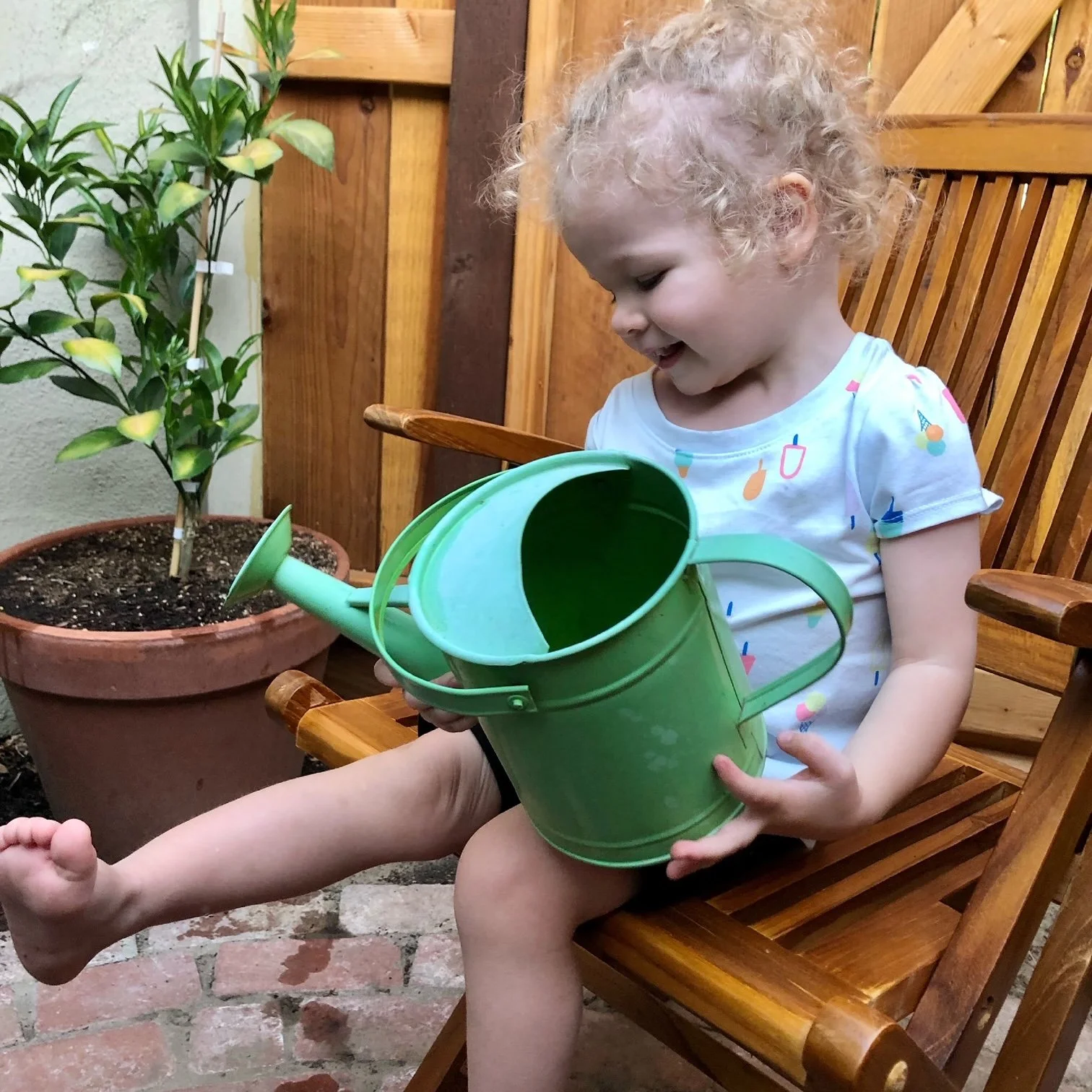
{happy} mighty joe happily waters everything on the back porch these days


{real} that's right. certified hunk. uh-huh.


round button chicken

Tuesday
May222012

Our Top Ten Favorite Homeschooling Websites


Over the 14 years that we've been homeschooling, we've seen some pretty terrific websites created by some pretty terrific people. Many of you will be familiar with our list of Top Ten Favorites because you've been hanging out here for so long. Thank you! But for those of you who may be unfamiliar with at least some of these sites, I hope they inspire and encourage you as they have us.


10. The Well-Trained Mind Forums I've been using The Well-Trained Mind forums since their inception (we had dial-up, and the forum was long lists of posts back then) and I am indebted to the thousands of homeschoolers who have posted there on every possible subject related to educating children at home. When I have a question about a curriculum or grade level or website, The Well-Trained Mind Forum is the first place I go. I also buy and sell curriculum successfully on the sale and swap boards.


9. Schoolhouse Teachers Now, I know that when you click over to Schoolhouse Teachers and see ahem- me- as the spokesperson, you're going to think, "Well, of course she listed this site as a top ten favorite!" But actually, no. I'm super excited about all Schoolhouse Teachers has to offer and so I actually volunteered for that position. No kidding! Watch the promo video (egads) and then look around- it's an amazing resource for classes and lessons and activities to keep our kids really engaged in learning, and it's turning my own homeschool planning for next year completely upside-down. I'll be using Schoolhouse Teachers daily.


8. Homeschool Creations There has always been a preschooler in this house, and so there is always a need for preschool activities. Jolanthe's FREE preschool printables are charming and useful. Plus, I recently had the delight of meeting Jolanthe and our funny conversation about orange t-shirts and bare shoulders make me happy to return to her site just to smile.


7. Homeschool Share Unit studies, Five-in-a-Row resources, lapbooks... and all for FREE! I love Homeschool Share. We've done lapbooks on sea creatures and kitchen safety and reptiles. I'm not an artistic or crafty mom, so I really appreciate when someone (or in this case, someones) do the legwork for me.


6. Heart of the Matter Over the years, Heart of the Matter has provided me with a whole lot of encouragement. I appreciate the authors' authenticity- their willingness to be real and share the struggles of this homeschooling life as well as the triumphs. There's a lot to be gleaned when we stay in community with one another and learn from each others' mistakes. You can add Heart of the Matter to your reader via RSS.


5. Timberdoodle Back in the very beginning of our homeschool journey, back when it was just the oldest three, Timberdoodle was there. We have seriously loved everything we've bought from Timberdoodle, from Kumon books to science curriculum to thinking skills.


4 Hold That Thought One of the easiest ways to record our history studies has been through notebooking pages and map work. At the beginning of each year I make photocopies of everything (yes, everything!) that we will need for the year, file it in each student's binder according to the week's lesson, and we're good to go. Hold That Thought provided beautifully-rendered notebooking pages that we love to use, year after year.


3. CurrClick In addition to the thousands of downloadable resources at CurrClick, there are so many great live classes available there, too. I know that one of my readers in Australia has her kids do the live classes, even though it means they have to take them at odd times. They're defintely worth it! My kids have taken live art classes, live seasonal classes on pioneer living and Christmas, and I already have one signed up for a class in July.


2. Homeschool in the Woods Along the lines of notebooking pages and hands-on projects, I love Homeschool in the Woods! Amy Pak's beautiful artwork makes us look like we're really artistic ourselves, and the projects stick around in my kids' brains, enhancing their studies and making history memorable. I've yet to see a better timeline or more lovely timeline figures.


1. Khan Academy  Sal Khan began Khan Academy with the intent of helping his cousins understand math and science. He uploaded videos of himself teaching weighty subjects, and they were so good that they caught on like wildfire. My niece was taking a college chemistry course from a professor who didn't speak English (!) and she was dying. I told her about Khan Academy and she said, "Aunt Kendra, this has saved my life!" It's not only stepped in when an algebra curriculum was not a good fit for one of our sons, it's provided excellent instruction and tracking, too: students must complete a set of problems before they're allowed to move on. Bonus for us this year- the art history series is fantastic!


This blog hop is inspired by our dear friend and sister Angie of Many Little Blessings. We would love to have you join us during our ten week adventure. Please link up at Angie’s blog by clicking the image below.